About Us
 Directors
 Community Programs
 Latest Articles
 Upcoming Events
 Business Inquiries


Confronting Anti-Black Racism Conference 2025
“White privilege may suggest that being white automatically leads to wealth, success or the avoidance of hardship. This is not true. However, being white offers advantages that may or may not seem obvious. Not being under the systemic gaze of the justice system is one of these privileges.” By Solomon Kobina Aremu.
Dr. Samuels-Wortley is an Associate Professor and Canadian Research Chair in Systemic Racism, Technology, and Criminal Justice in the Department of Criminology and Justice at Ontario Tech University. She, along with seasoned experts in various fields of policing, law, Black youth advocacy, education and more, converged to dissect and analyze critical race theories especially affecting Black youth and the justice system.
The day-long event sought to broaden our understanding of the whys and hows of Systemic Racism in Canadian society.
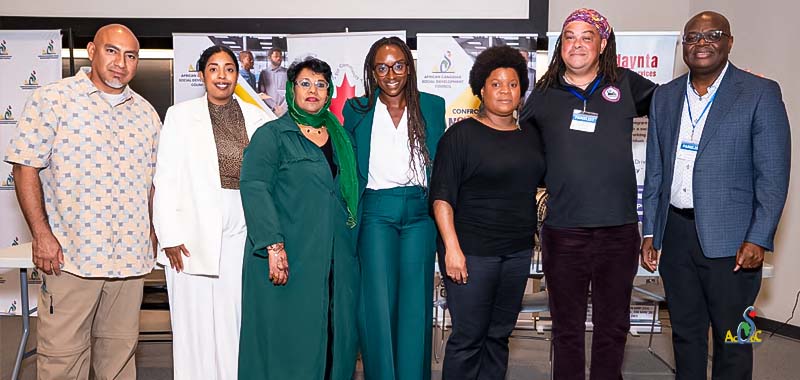
Photo:
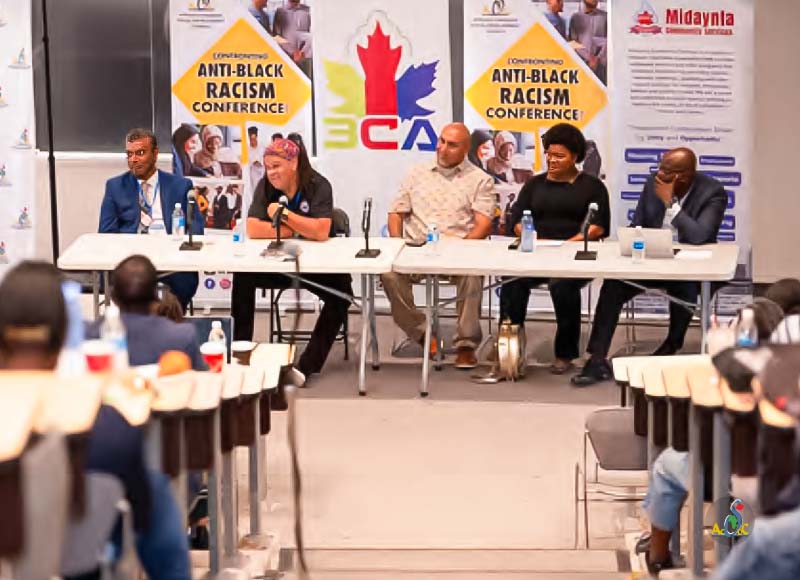
Our speakers and moderators (from left to right): Mr. Cristian Ortiz, Ms. Timiro Aganeh (Moderator), Dr. Jamila Aman (Moderator), Professor Kanika S. Wortley (Keynote Speaker), Ms. Candice Marie Holt, Mr. Marc (Kwabena) Rainford, and Barrister Shedrack Agbakwa.
According to the widely published and travelled Professor, her research findings concluded that “Black youth feel they are treated differently from their group of friends from other racial backgrounds. While white youth in my sample feel safe, respected and cared for by the same police.”
According to the erudite Professor, racially biased policing diminishes confidence and undermines police legitimacy. She concluded that it reduces the willingness to report crime and victimization, thus impacting public and individual safety and contributes directly to the disproportionate overall representation of Black, indigenous and other racialized people in the justice system.
In his welcome address, the President of the ACSDC, Mr. Kabu Asante decried the overwhelming disproportionate contact Black youth continue to have with the justice system. “Over policing, systemic bias and a lack of culturally appropriate support have created barriers to safety, opportunity and justice for many of our young people,” he lamented. “This conference is more than a discussion.
It is a call to action. It is a space where lived experience meets policy, where accountability meets collaboration, and where healing begins through dialogue.” As we reflect, learn and challenge each other over the course of this conference, let us keep our focus clear; to uplift, protect and empower black youth and to build a justice system that serves them, and not one that stands in their way.” Mr. Asante charged.
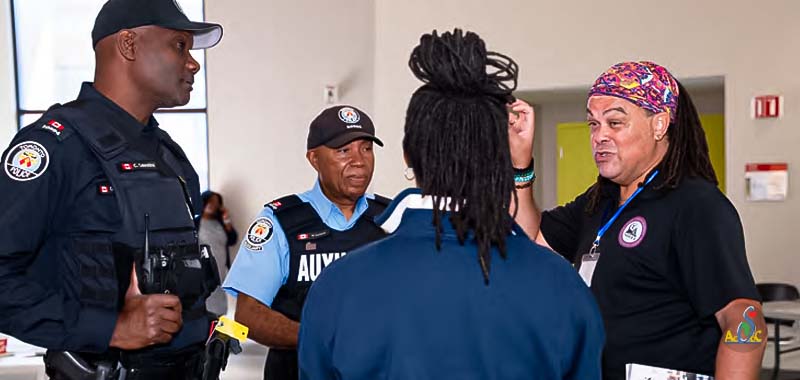
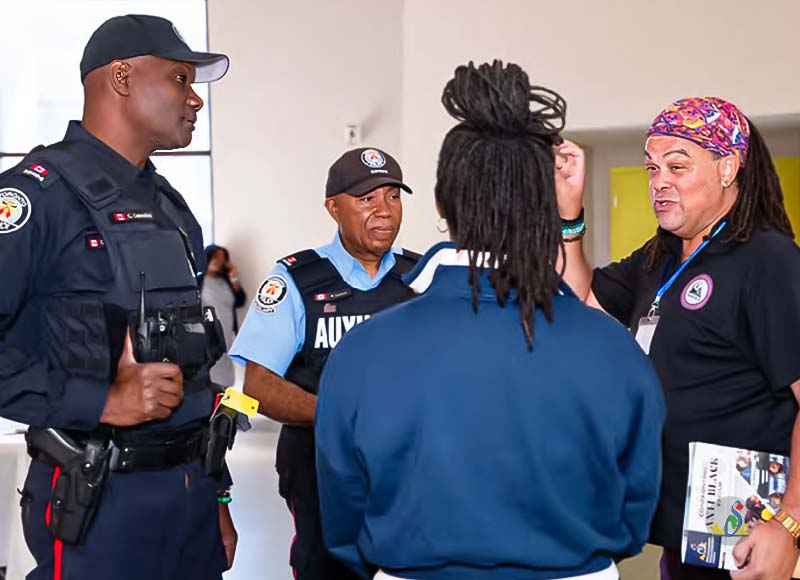
Photo:
PC Curtis Celestine (left) and his colleague from the Toronto Police Service are chatting with attendees and the speaker.
PC Martin Douglas, a member of the Toronto Police Service Integrated Gang Prevention Task Force Unit, took the audience through real-life experiences of black youth who have been left holding the wrong end of the criminal justice system stick. He identified several risk factors like family, school, peer groups, individual and community. He admonished youth to remain calm, think through situations and avoid rash choices, whose consequences create ripple effects for life or even across generations. For instance, having a criminal record as a teenager can impact your employment eligibility for decades.
Timor Aganeh, Youth Justice Coordinator at Midaynta Community Services, a major organization partner of ACSDC, introduced the panellists. The panel discussion featured Chaplain Habeeb Alli, (Restorative Justice Advocate). He spoke of the eroding concept of traditional respect for parents and the elderly and weakening bonds within family, community and society at large as one of the contributing factors that lead the youth, particularly those whose parents recently migrated to Canada. For some of the youth, it may be that they perceive their parents’ cultural beliefs, carried over from their original countries, don’t align with the Canadian environment in which they grow in. This may lead to some identity conflict and influence how they react in a hostile or uncomfortable, racially tinged situation.
“We have an obligation to right that wrong and to listen to those who were most affected and shed light on the truth,” he said. The 8-hour-long event had two panels and comprised various experts in the areas of employment, workplace equity and affordable housing.
Candice Marie Holt (Founder and CEO of Clockwork Coaching and Consulting for Teachers Inc.) summarizes the key approaches to fight systemic racism as: Self-regulation, Conflict resolution, Critical thinking and Advocacy.
Shedrack C. Agbakwa (Managing Partner of Agbakwas LLR Law firm) dropped a thought-provoking insight while sharing his own experience. Even being a successful professional like a seasoned lawyer is no guarantee against systemic racism if you are Black. One could feel the shock from the entire audience when Lawyer Agbakwa said this, 11 Even as a Black lawyer walking into the courtroom to defend a client, I constantly face direct and subtle discrimination. 11 This clearly shows how deep and ubiquitous systemic racism is in the country.
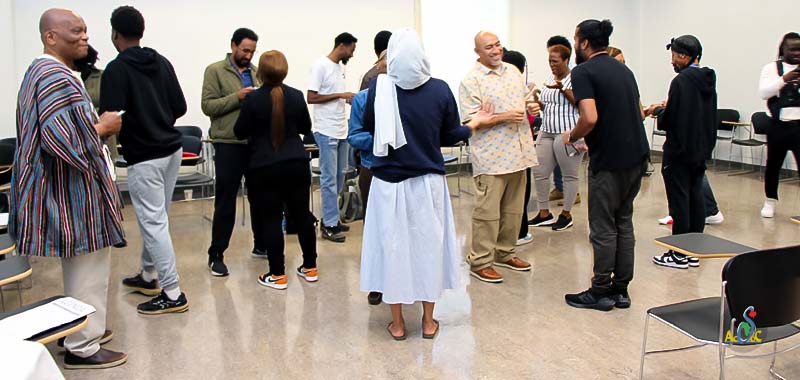
He pointed out that, through this, schools and school boards would be presented with new and expanded ideas and the opportunity to prioritize and implement robust anti-racist and equity agendas, including the intentional hiring of a diverse teaching force. Adding to this, Dr. Dei stressed that the departments responsible for the anti-racism and equity processes in the schools are woefully underfunded, which limits their work. He called for an increase in resources, including funding, to expand their work.
Marc Rainford, (former Police officer and now Director of Community Safety at the Youth Association for Academics, Athletics and Character Education serving the Jane and Finch community). He described over policing and under policing of certain communities like a canker that the authorities must strive to expunge by striking a fair balance. Over policing whiles claiming to be looking for suspects makes the people in that area defensive and suspicious of the police.
At the same time, under policing, when people in those poor and disadvantaged communities are the victims sends the message that the police don’t care about them, and so they look for their own ways to “sort things out,” leading to more crime, more profiling and more arrests and jail time for the Black youth. This perpetuates a vicious cycle of systemic racism.
Premier of Ontario, Doug Ford, speaking through his representative at the event, Michelle Telfeyan, Executive Assistant for MPP Doug Ford, Etobicoke North, Legislative Assembly of Ontario, thanked the leadership of the ACSDC for it’s consistent efforts in the fight against systemic racism over the years and promised that the “government of Ontar-io will continue to support Black youth and professionals through our Black Youth Action Plan”
Member of Parliament for Humber River-Black Creek, Hon. Judy Sgro sent this message:” This important conference continues to inspire Black Youth in Canada to build resilience, foster leadership and open pathways to long-term success. It shines a light on the systemic challenges that persist within our criminal justice system and their profound impact on Black Youth. “
On her part, Toronto Mayor Olivia Chow promised that the city “is working with Black leaders, Black-led organizations and businesses as part of the renewed 10-year Toronto Action Plan to confront anti-Black racism to deliver better outcomes to Black Torontonians”.
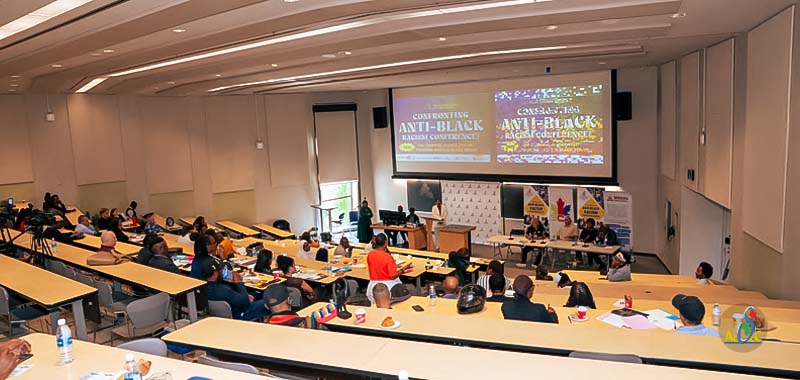
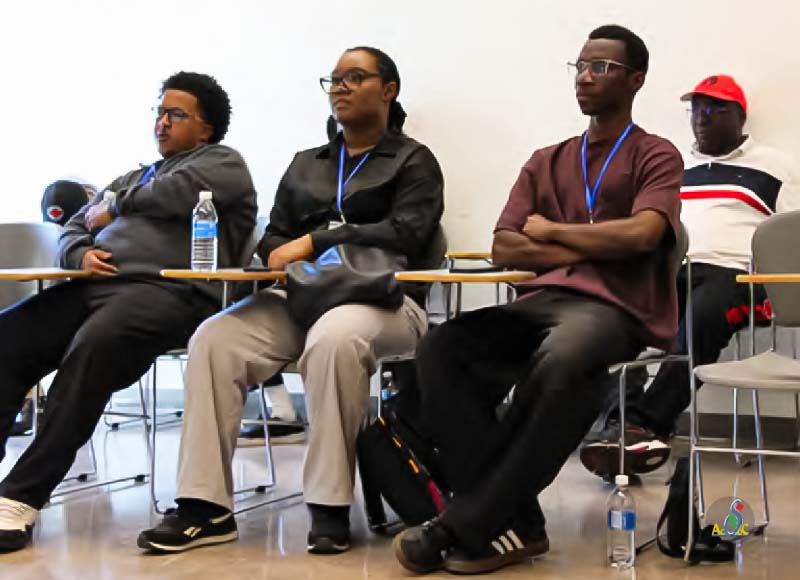
Photo:
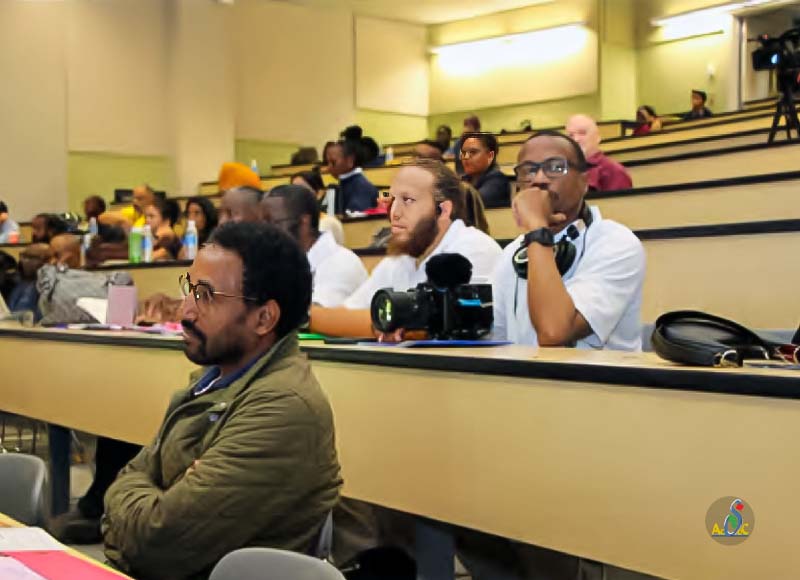
Conference Room.
RACISM IS LEARNT
Systemic racism is a general application by the dominant group/groups.
HOW TO IDENTIFY RACISM
Reverse apply The Golden Rule: “Do unto others what you expect others to do unto you.”
Is what is being done to you what you would have done to others? If the answer is no, it could be discrimination or racism. In any setting you find yourself, where you feel the person or people are not treating you the way you would treat them, is a good indicator. If the situation is not too hostile or dangerous, don’t back down. Quickly voice your disapproval firmly to the perpetrators.
Tell someone. A family member, a co-worker or your supervisor, if you are at work or if you are in school, report to a teacher or the authorities immediately. Remember also that racists are like bullies. They like targeting those they perceive as weak and vulnerable. Always project a sense of strength and confidence wherever you are. However, back off if the situation is getting physical and dangerous.
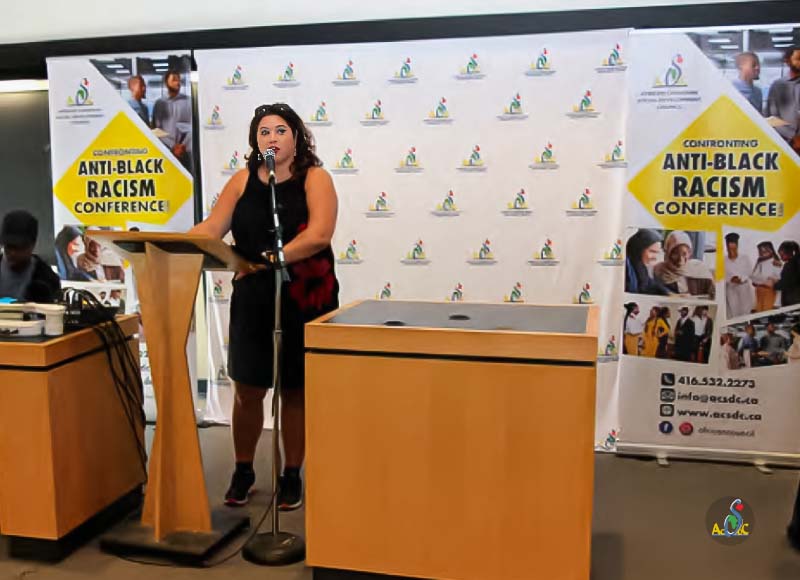
The highly successful event was MC’d by the charming, versatile and highly accomplished Dr. Jamila Aman, CEO and President of Premier Canadian Business Solutions Inc. Her opening remarks at the beginning of the conference were a profound rallying call. “We are here to acknowledge the harm racism has caused and work together towards healing and change. Let’s be open, respectful and sympathetic. Let’s confront racism today and imagine a different future where everyone is thriving regardless of their background or race.
Let’s make this vision a reality!

Anti-Black Racism Conference Photos